One and One Make Eleven — Part 1
Once, not so long ago, Anish and Khushi walked to school shoulder to shoulder. Well — shoulder to elbow, really, because Anish was ten and tall-ish and Khushi was eight and small-ish, and their shoulders had never once agreed on a height.
The morning always began the same way, in the flat on the second floor, with Mom at the stove — humming under her breath, the kitchen already warm with the smell of the parathas she made just for them. She packed the big things with love, the way only Mom does: an extra paratha folded into foil “in case someone at school looks hungry,” a small steel bowl of curd pressed shut with both thumbs. But the tiffin itself was Anish’s own kingdom, and everyone knew better than to touch it. He packed it the way he did everything — in order. Aloo before bhindi. Always. “You cannot put bhindi first,” he explained to no one, folding the lid. “It’s not how the alphabet works.” Mom only smiled and ran a warm hand over his hair, saying nothing, which said everything. Across the table Khushi was already halfway to three smiles on her fingers (“Mom’s counts, the milkman’s counts, and I’m SAVING the third one”), and she leaned over and dropped a fat green chilli right on top of Anish’s perfectly ordered rice.
Anish went pale. Khushi went pink with laughing. Mom pretended to be cross — “Both of you, out, before you’re late!” — which is what she said every single day, shooing them to the door with one hand while the other tucked the foil-wrapped paratha into Anish’s bag when he wasn’t looking. It was the kind of scolding that meant I love you, hurry up.
Then came the walk — the best part of the morning, though neither would have called it that. The two of them went side by side, shoulder to elbow, Khushi humming a film song with her own words stuffed into it — something about a mango and the moon that only rhymed if you weren’t really listening — and Anish carrying both bag straps, because that was the sort of thing a big brother did without being asked. Two children, one road, one shadow that split in two only where the sun caught it. He pretended not to know her. He secretly knew every wrong word.
And then, somewhere between one Monday and the next, the walk came apart.
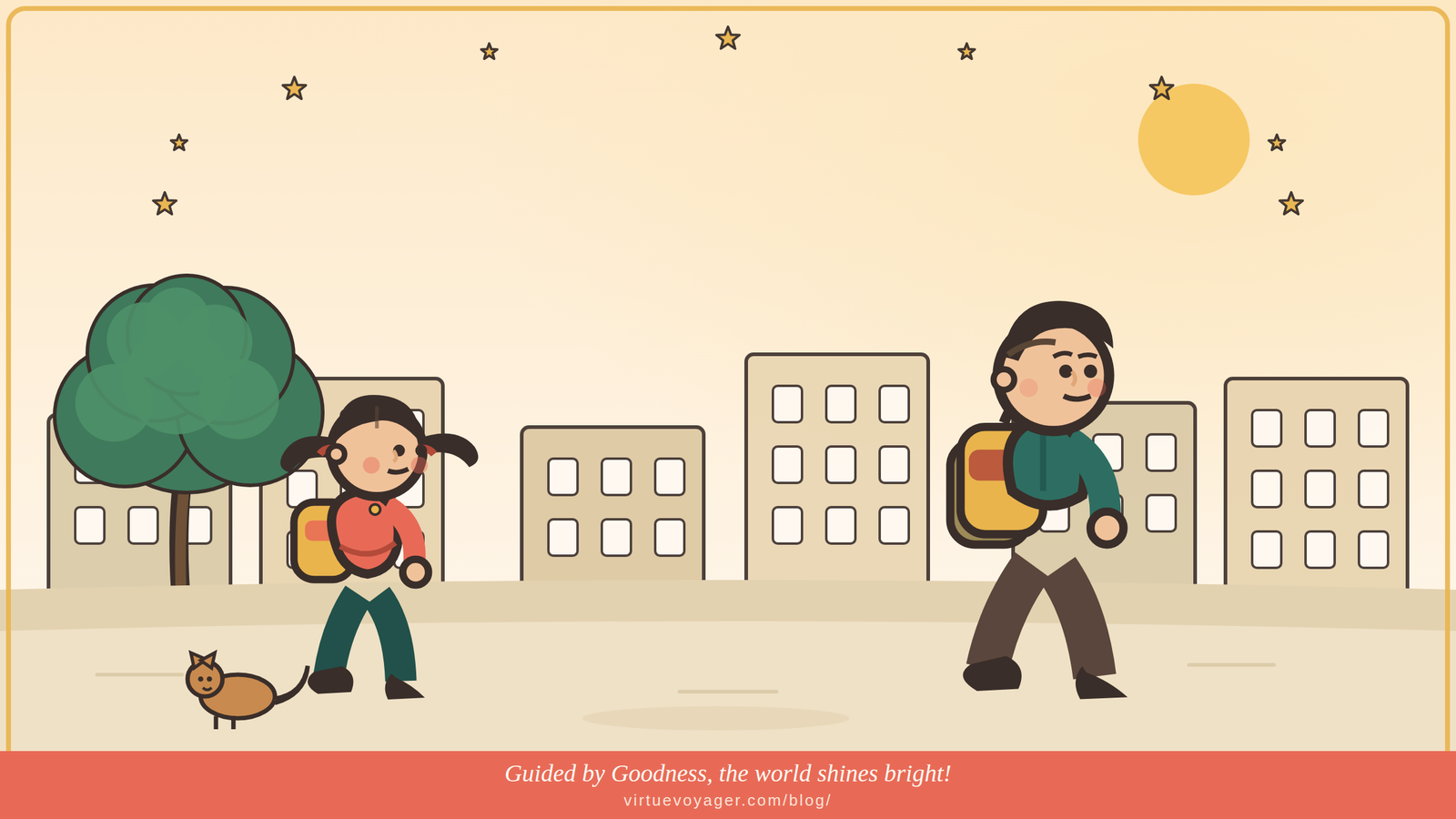
Nobody announced it. Anish just… started walking faster. A boy in his class had said, “You bring your little sister everywhere?” and laughed — and the laugh lodged itself in Anish like a small stone in a shoe. So now he strode ahead, eyes forward, bag on one shoulder like the big boys, while behind him Khushi walked with the courtyard cat and the watchman’s “good morning, beti” and her own uncounted smiles.
Two children. One road. Two completely separate mornings.
That day, the two separate mornings turned into two separate walls.
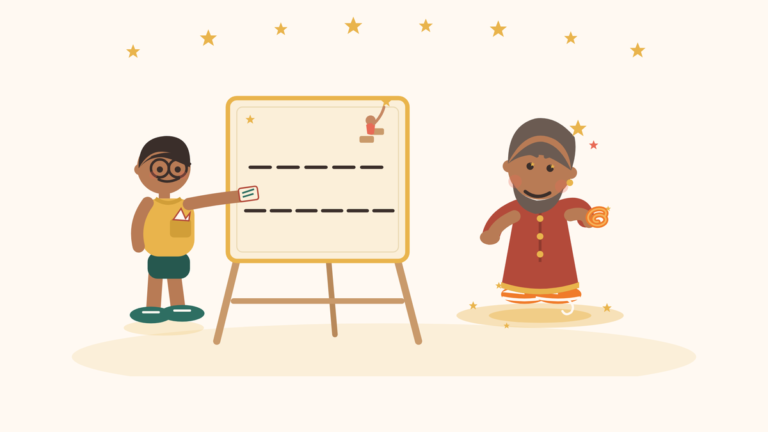
Anish’s wall arrived in the third period. His teacher pointed at the cricket-scoring chart on the board and asked the class about it — and the number was wrong. Anish knew it was wrong the way he knew his own name. He’d even made something for it the night before: a neat folded chart, corners sharp, averages worked to two decimals, sitting in his pocket that very second.
All he had to do was raise his hand.
His hand did not raise. It lay on the desk as though it had forgotten it was a hand.
And in that stuck, silent moment, a memory came to him — uninvited, the way the important ones do. He remembered the afternoon a much bigger boy had snatched his puzzle book at the park and held it high, out of reach, laughing. Anish had stood there, throat locked, saying nothing. And then a small tornado in pigtails had marched right up to the big boy, hands on hips, and announced to the whole park, “That is MY brother’s book and he is the CLEVEREST person here, so give it BACK.” She’d been half the boy’s size and completely unafraid. The book had come back.
Where do you keep it, Anish wondered now, staring at his frozen hand, that fearlessness? How does someone so small hold so much of it? And a smaller thought underneath, one he didn’t quite have words for: If she were in this room right now, my hand would already be up. She’d have made it go up. I’m braver when she’s beside me — and she isn’t.
The moment stretched, and stretched. The teacher moved on. The wrong number stayed up there, glowing at Anish like a splinter he couldn’t reach.
Across the corridor, Khushi was fighting a wall of her own, and hers was built entirely of waiting.
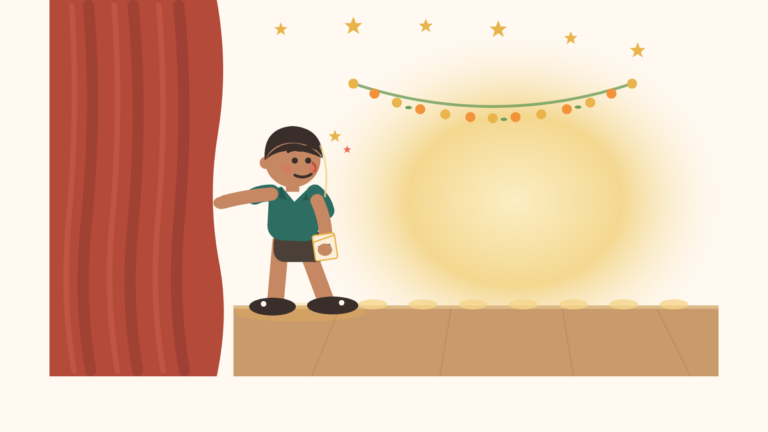
It was art period — the best period — and Khushi had the BEST idea: a rangoli in every colour, even the ones that didn’t have names yet. But the teacher said, “One by one, please. Khushi, you’re number nine.”
Number nine. Eight whole children stood between Khushi and her idea.
Waiting, for Khushi, was like holding a sneeze. She jiggled. She tried to count the ceiling fan’s rounds and discovered they were uncountable, which felt deeply unfair. She started to tell Riya beside her about the rangoli — “shh, wait your turn, beta,” said the teacher, kindly — and the whole idea sat trapped inside Khushi, fizzing, with nowhere to go.
And then she remembered something too.
At home, when an idea fizzed up in her like this and there was no room for it, there was always a boy who’d catch it. Anish never told her to be quiet. He’d just tear a small strip of paper, write the idea down in his careful letters, and slide it across to her — there, it’s safe, it won’t run away, you can let it out later. Once, when she’d had a plan too big for bedtime, he’d written the whole thing on a slip and tucked it under her pillow so it would keep till morning. Her fizzing ideas had a home, because he made them one.
I need a paper slip, Khushi thought, and her chest went tight in a new way. I need someone to catch this before it goes flat. I need — She didn’t finish it. But she looked toward the door, toward the corridor, toward wherever her tall, quiet, slip-writing brother was being tall and quiet and far away. By the time it was finally her turn, her BEST idea had gone a little flat, like a balloon left out overnight.
School ended the way it began now. Separately.
Anish walked ahead, the wrong number still glowing behind his eyes, the folded chart still in his pocket, unopened, useless. Khushi trailed after, her flat-balloon idea bumping along behind her, past the courtyard cat, past the watchman.
Two children. One road. Two heavy bags — and, today, only one of them on Anish’s shoulder.
And though neither said it, and neither would have admitted it even under torture by the ceiling fan, each was thinking the very same thought at the very same second, ten steps apart:
I was braver when you were next to me. I wish you were walking next to me now.
Neither of them turned around.
Not yet.
Two things to wonder about before tomorrow: have you ever known exactly what to say, and found the words simply wouldn’t come? And is there someone whose being near you makes you braver — someone you’ve somehow started walking past?
(The story continues next Weekend.)
Grown-up note
For the grown-up by your side: Notice, this week, the small wordless ways the people under your own roof already make one another braver — a fierce word spoken up for someone, an idea quietly kept safe. You don’t have to do anything with what you notice. Just let it be a question you carry gently: who has been walking beside me all along, and when did I last feel it?