
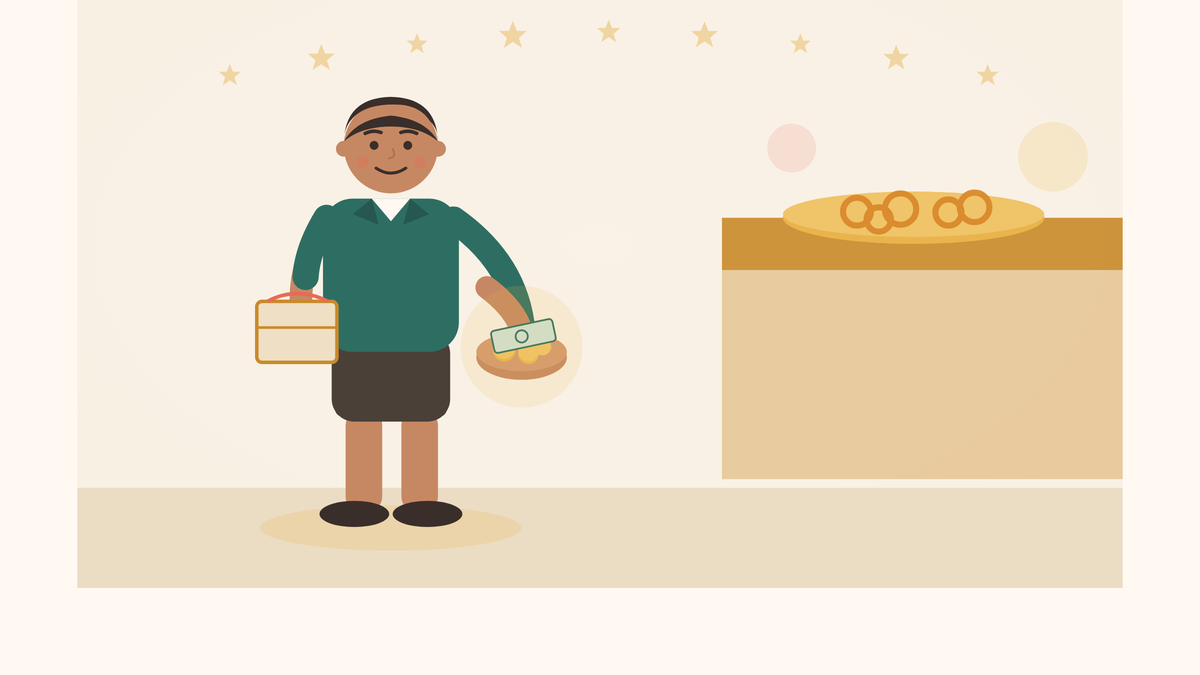
The Extra Change
The Extra Change
The best jalebis in the whole colony came from Bansal Uncle’s shop, and everyone knew it — including the flies, who arrived early and left disappointed, because the sweets never lasted.
On Saturday, Aarav’s mother sent him for half a kilo. “Exactly half,” she said. “And bring back the change.”
Aarav liked errands. He liked the ting of the shop bell, the smell of hot syrup, the way Bansal Uncle wrapped everything as if it were a small present. He handed over the hundred-rupee note and watched the jalebis go into the box, still glistening.
“Here you are, beta,” said Bansal Uncle, dropping coins and notes into Aarav’s palm. The shop was crowded; three aunties were arguing pleasantly about the price of ghee; the bell kept ringing.
Aarav walked out into the sun, tucked the box under his arm, and counted the change the way he always did — carefully, twice, tapping each note.
And then he stopped in the middle of the lane.
The jalebis had cost sixty rupees. His change should have been forty. But in his hand, counted twice, sat fifty rupees. Ten rupees too many.
For one bright, buzzing second, Aarav felt a little thrill — the thrill of an unexpected windfall, ten rupees that had simply appeared. Ten rupees was two comics. Ten rupees was a whole packet of the tangy orange sweets Khushi loved. Nobody had counted. Nobody had noticed. The lane was empty except for a sleeping dog and a crow eyeing his box.
He took three steps toward home. Then he took one step back.
Here is the odd thing Aarav noticed, standing there: the ten extra rupees felt heavy. Not in his hand — in his chest. Like a small stone he’d swallowed. He thought about Bansal Uncle counting his money that night, finding it ten short, wondering where it went. He thought about how the shopkeeper always wrapped things like presents.
“This is a Bubble kind of happiness,” Aarav thought. “Ten rupees now — fun for a moment, gone by evening.” He knew, the way Kindness Champions come to know, that there was another kind waiting on the other side of a very short walk.
He turned around.
The bell went ting. Bansal Uncle looked up, surprised. “Forget something, beta?”
“You gave me ten rupees extra,” Aarav said, and put the note on the counter. “The jalebis were sixty. I got fifty back. It should’ve been forty.”
For a moment Bansal Uncle just looked at the note. Then his face did something wonderful — it went soft and glad all at once. “Arre,” he said quietly. “You counted. And you came back.” He pressed one warm jalebi, wrapped in paper, into Aarav’s hand. “Not for the ten rupees. For the walk back. That’s the harder half.”
Aarav ate it on the way home, spiral-first, the way the Genie would have. The stone in his chest was gone. In its place was something lighter and longer-lasting — the warm-blanket kind of happy that stays.
Ten rupees, he decided, had never bought anything half so good.
Moral of the Story: The sum was easy; the walk back was the real arithmetic — and honesty is the answer that keeps.
Now — two questions to carry to your own table: Aarav felt the extra money as heavy. Have you ever felt a choice in your body before your mind caught up? And why do you think the sweetest part came after the harder step, and not before?
“Guided by Goodness, the world shines bright!” — Virtue Voyager
GROWN-UP NOTE — “FOR THE GROWN-UP BY YOUR SIDE”
The “extra change” moment visits adults too — a wrong bill in our favour, an error no one will catch. Children read our small, unglamorous corrections far more than our speeches. You might share one such moment of your own this week; the walk back is more teachable when it’s yours.