The Promise Thread
On the morning of Raksha Bandhan, the flat smelled of ghee and marigolds, and Khushi could not sit still.
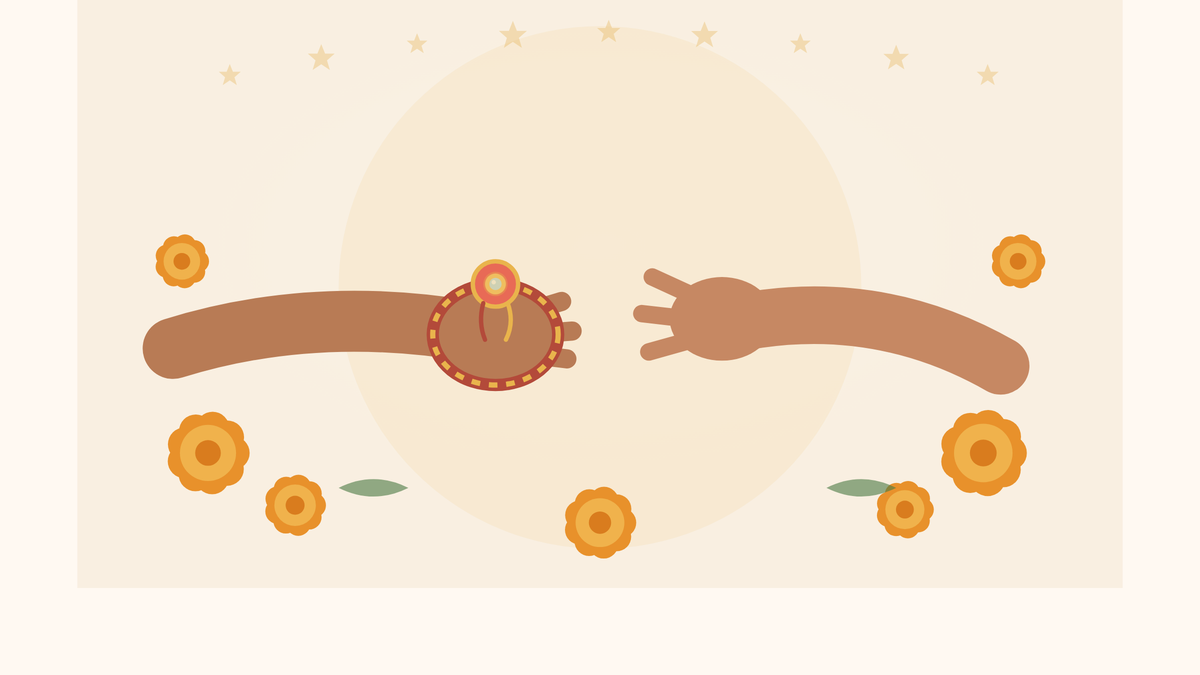
She had chosen Anish’s rakhi three days ago — a small one, red and gold, with a single glass bead that caught the light. Now she held his wrist and tied it on with great ceremony, three knots, her tongue poking out in concentration. Anish, who alphabetised his tiffin and rarely said two words when one would do, looked at the thread on his wrist and said, “…Thank you.”
“That’s not all,” said Khushi, planting her hands on her hips. “A rakhi is a promise. You promise to look after me. Say it.”
“You’re eight,” said Anish. “I look after you every day. I reorganise your shelf.”
“I don’t want my shelf reorganised!”
“See? Looking after.”
Their Dadi laughed from her chair. “Come here, both of you,” she said, and they went, because you always go when Dadi calls.
She took the loose end of Anish’s rakhi between two fingers. “Do you know why we tie a thread?” she asked. “Because a promise is usually invisible. You can’t see it, you can’t weigh it, you can’t hang it on a wall. So once a year, we make one promise visible — we tie it on, bright as a marigold, so that everyone can see it and no one can forget it.”
Khushi frowned, thinking hard. “But if promises are usually invisible…” she said slowly, “then we must be tying them all the time. Every day. Just without the thread.”
“Now you’re getting it,” said Dadi.
“Like what?” said Anish.
So Dadi told them. She told them about the invisible thread Anish tied every morning when he tended his little puja shelf without being asked — a promise to something quiet inside himself. About the thread Khushi tied every time she said you can sit with us to a child eating alone — a promise that nobody would be left outside the circle. About the thread their mother tied by getting up in the dark to make tiffins, year after year, a promise she had never once spoken aloud.
“Your mother has kept that promise for years,” Dadi said, “and do you know how many times anyone has said thank you for it?”
Khushi and Anish looked at each other. They looked at the kitchen, where their mother was folding a fresh box shut.
“Not enough,” Khushi whispered.
Here is the thing about the invisible threads: they are the strongest ones. A promise you keep because someone is watching is a Bubble promise — it can pop the moment the watching stops. But a promise you keep quietly, for years, with no thread and no thank-you, when nobody would ever know if you let it slip — that is the Blanket kind. That is the promise that holds a whole family together, thread by unseen thread.
Khushi marched into the kitchen. She didn’t have a rakhi for her mother. So she did the next best thing: she took her mother’s wrist, tied three knots of an imaginary thread, and said, very seriously, “Thank you. For every tiffin. I saw it. I promise to see it.”
Her mother’s eyes went bright. Anish, who rarely said two words, came and tied the fourth knot in silence.
And that was the truest promise tied that whole Raksha Bandhan — the one made of no thread at all.
Moral of the Story: The rakhi you can see is beautiful; the promises you can’t are the ones that hold the world together — so keep them, and once in a while, let someone know you’ve seen theirs.
Two threads to pull at your own table: What invisible promise does someone in your home keep every single day — and have you ever told them you noticed? And why do you think Dadi calls the unseen promise the strongest of all?
“Guided by Goodness, the world shines bright!” — Virtue Voyager
GROWN-UP NOTE — “FOR THE GROWN-UP BY YOUR SIDE”
Raksha Bandhan makes one promise visible; the day is a good moment to notice the invisible ones we tie without speaking — the early alarms, the folded tiffins, the small fidelities of years. A quiet question for you: which promise have you kept, faithfully and unremarked, without anyone ever noticing? You might let this be the year someone notices theirs.