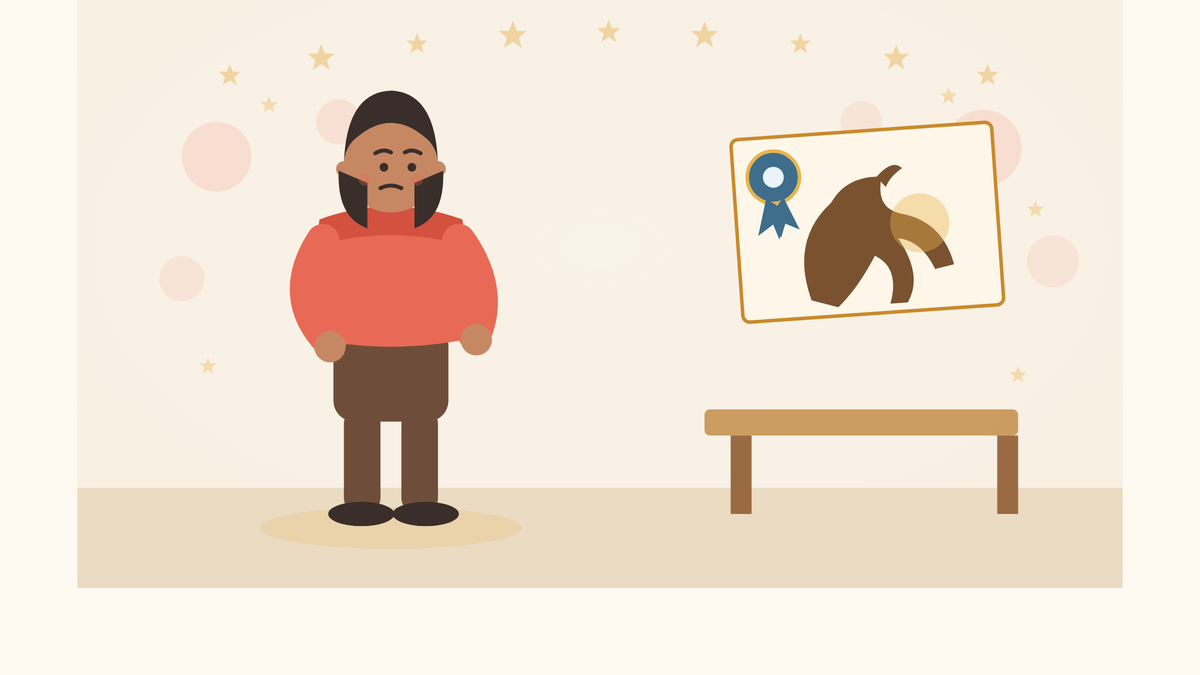
The Copied Drawing
The art competition had one rule, painted in big letters on the board: Draw something you love. Draw it yourself.
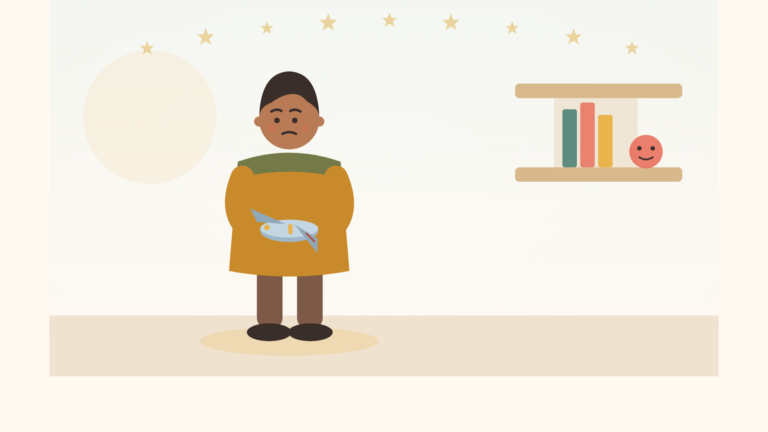
Sana loved horses. She could see them perfectly in her head — manes like waterfalls, legs mid-gallop — but every time she tried to draw one, the legs came out like table legs and the mane came out like spaghetti. She’d nearly given up when she found it: a beautiful horse in an old magazine, rearing against a sunset. Just to practise, she told herself, she copied it. Line for line. Sunset and all.
It came out perfect. Because, of course, it wasn’t hers.
She meant to draw a new one. She really did. But the morning of the competition arrived, and her practice horse was so much better than anything she could make fresh, and the board still said draw something you love — and she loved this horse, didn’t she? So she pinned it up.
When the results came, Sana’s horse won the blue ribbon.
The class clapped. Her teacher, Meena aunty, held the drawing up for everyone. “Look at this mane,” she said warmly. “Look at the life in it.”
Sana smiled. But it was a strange smile, stretched too tight. Because right then, in the middle of all the clapping, she noticed something no one had told her about winning: the ribbon felt heavy. Not on her chest, where they pinned it — heavier than that. Every “well done” landed on her like a small stone, because each one was meant for a girl who had drawn that horse, and that girl didn’t exist.
Beside her, Tara was clapping too. Then Tara leaned over, her question-mark face tilted, and whispered — not unkindly, just curiously — “Sana… how did you get the sunset colours exactly like a photo?”
It wasn’t an accusation. It was just Tara, asking the question everyone else was too polite to ask. But it went straight through the tight smile.
Sana thought about carrying the heavy ribbon home. She thought about her mother framing it. She thought about the horse-that-wasn’t-hers hanging on her wall forever, whispering you didn’t make me every single day.
At lunch, she found Meena aunty alone.
“The horse isn’t mine,” Sana said. The words came out in a rush. “I copied it from a magazine. I only meant to practise, and then it was better than anything I could do, and I— it isn’t mine. The ribbon isn’t mine either.”
She waited for the world to end. It didn’t.
Meena aunty was quiet for a moment. Then she said, “Thank you for telling me. That took more courage than winning.” She didn’t shout. She didn’t tear the drawing down in front of the class. She simply said, “The ribbon we’ll set aside — that’s fair, and you already know why. But I have a different competition for you. One drawing. Any animal. Table-leg horses allowed.” She smiled. “I’d like to see your lines. Wobbly ones are the honest kind.”
Sana drew a horse that afternoon. The legs were a bit like table legs. The mane was a bit like spaghetti. It did not win anything.
But when she pinned it to her wall at home, it didn’t whisper anything at all. It just hung there, light as light, and hers.
And that — she decided — was worth more than any ribbon.
Moral of the Story: Praise you didn’t earn is the heaviest thing to carry; the truth sets it down, and what’s honestly yours — wobbles and all — is lighter and dearer than anything borrowed.
Two questions for the table: Sana felt the ribbon as heavy even while everyone cheered. Why do you think the truth felt lighter than the prize? And what do you notice about how Meena aunty helped — what did she choose not to do?
“Guided by Goodness, the world shines bright!” — Virtue Voyager
GROWN-UP NOTE — “FOR THE GROWN-UP BY YOUR SIDE”
The delicate art here is Meena aunty’s: repair without shame — setting the ribbon aside as simple fairness while protecting the child’s dignity and inviting her back to her own honest lines. A reflection for us: how do we let a child fully own a mistake without letting them feel small in the owning?